
 Business License

Refractory Brick Grades for Cremation Furnaces: Silicon Carbide vs. High Alumina vs. Mullite
A crematorium in South America replaced its primary chamber refractory lining with what the supplier called "standard furnace brick." Eight months and roughly 900 cycles later, the lining had spalled in multiple zones, cold spots had formed along the arch, and fuel consumption had climbed by roughly 25%. The brick grade was not incorrect in any absolute sense — it was simply the wrong match for the thermal cycling pattern, chemical environment, and mechanical load of a human cremation furnace.
Refractory selection is one of the few equipment decisions where a roughly 10% to 15% difference in material cost can translate into a 50% or greater difference in service life. Getting it right means understanding three things: what each brick grade does well, where each one fails, and how the operating profile of a specific facility tilts the trade-off one way or another. This article compares silicon carbide, high alumina, and mullite — the three refractory grades most commonly specified in modern cremation furnaces — across the dimensions that determine long-term performance and total cost of ownership.
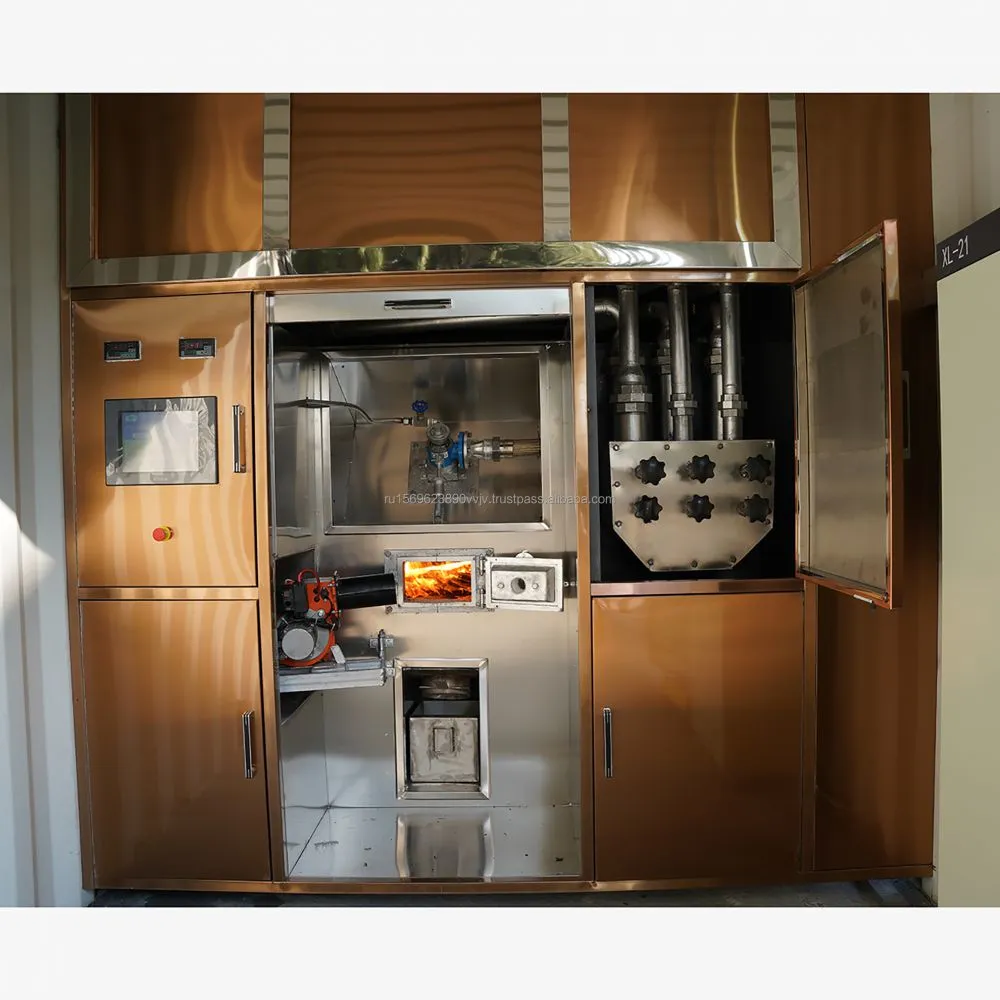
1. Why Refractory Material Choice Shapes Cremation Furnace Economics
The refractory lining inside a cremation furnace serves three functions simultaneously. It insulates the steel shell from chamber temperatures that exceed 1,000°C. It stores thermal energy during the burn phase and re-radiates it during the next cold-start ramp, directly influencing fuel consumption per cycle. And it resists chemical attack from alkaline compounds, chloride vapors, and thermal cycling stress that would destroy ordinary construction brick within a few hundred cycles.
When a lining fails, the consequences cascade quickly. Fuel use rises as heat leaks through cracked brickwork. Cold spots form, extending cycle time and leaving incomplete combustion in their wake.
Eventually, the steel shell overheats, warps, and threatens the structural integrity of the entire furnace. A relining job on a mid-size cremation unit costs roughly USD 8,000 to 15,000 in materials and labor, plus one to two weeks of downtime. Choosing a brick grade that doubles the relining interval — from roughly 1,500 to 3,000 cycles, for example — saves that cost at least once, and often twice, over the furnace's operating life.
2. Silicon Carbide (SiC) Bricks: Maximum Heat Transfer, Premium Price
Silicon carbide bricks are the highest-performing option available for cremation furnace primary chambers, and their cost reflects that position. With thermal conductivity roughly eight to ten times that of conventional fireclay — typically 15 to 25 W/m·K versus 1.5 to 2.5 W/m·K — SiC spreads heat rapidly and evenly across the chamber profile. This eliminates cold spots near the door and flue outlet, shortens heat-up time, and allows the burner to operate at a lower average firing rate during steady-state conditions.
The trade-off is mechanical. SiC bricks oxidize at temperatures above roughly 1,200°C under oxygen-rich conditions, forming a silica glass layer that progressively weakens the bond structure. They also cost roughly three to five times more per cubic meter than high alumina alternatives.
For a standard mid-size cremation furnace primary chamber requiring roughly 2 to 3 cubic meters of refractory, the SiC premium adds roughly USD 3,000 to 7,000 to material cost. The question for a buyer is whether the fuel savings, shorter cycle times, and longer service interval recover that premium within an acceptable payback period — typically two to four years in facilities running more than three cycles per day.
Not long ago, Jinjiben Trading worked with a municipal crematorium in Southeast Asia that switched from high alumina to SiC in two of its four primary chambers. Over eighteen months of operation, the SiC-lined chambers averaged roughly 22% lower fuel consumption per cycle and required no patch repairs, while the high-alumina chambers needed minor patching at roughly the twelve-month mark. The fuel savings alone recovered roughly 60% of the SiC premium within the first year.
3. High Alumina Bricks: The Balanced Performer
High alumina bricks — typically containing 60% to 80% Al₂O₃ — are the default choice for secondary chambers, flue ducts, and primary chamber zones where thermal shock resistance matters more than maximum conductivity. They handle continuous service temperatures up to roughly 1,450°C to 1,600°C depending on grade, offer reasonable resistance to alkaline vapor attack, and cost roughly one-third to one-fifth the price of SiC per cubic meter.
The defining characteristic of high alumina brick in a cremation furnace context is its balance between three competing properties: refractoriness, chemical resistance, and thermal shock resistance. No single high-alumina formulation maximizes all three simultaneously.
An 80% Al₂O₃ brick with low porosity offers excellent chemical resistance but moderate thermal shock tolerance. A 60% Al₂O₃ brick with higher porosity survives rapid cycling better but absorbs more alkaline vapor, shortening its useful life in secondary chamber service. In our experience, the 70% to 75% Al₂O₃ range offers the best compromise for secondary chamber duty in facilities running four to eight cycles per day — which describes the majority of cremation furnaces we have supplied to municipal clients in Eastern Europe and Southeast Asia.
4. Mullite Bricks: Thermal Shock Resistance on a Budget
Mullite (3Al₂O₃·2SiO₂) bricks occupy a specific niche in cremation furnace construction: zones subject to frequent temperature swings but relatively low chemical attack. Door arches, burner quarls, and the transition zone between primary and secondary chambers are typical mullite applications. The material's low thermal expansion coefficient — roughly 4.5 to 5.5 × 10⁻⁶ /°C — means it expands and contracts less during heating and cooling cycles than either SiC or high alumina, dramatically reducing the stress that leads to spalling.
The trade-off is lower maximum service temperature (roughly 1,500°C to 1,600°C versus 1,700°C+ for premium high alumina) and lower chemical resistance in alkaline environments. Mullite bricks placed in direct contact with cremation off-gases in the secondary chamber typically show measurable surface degradation after roughly 500 to 800 cycles. In the door arch, where temperature cycling is severe but chemical exposure is moderate, the same mullite brick can last 3,000+ cycles without significant deterioration.
| Property | Silicon Carbide (SiC) | High Alumina (60-80% Al₂O₃) | Mullite |
|---|---|---|---|
| Thermal Conductivity (W/m·K) | 15–25 | 1.5–2.5 | 1.8–2.8 |
| Max Service Temp (°C) | ~1,400 (oxidizing) | 1,450–1,700 | 1,500–1,600 |
| Thermal Shock Resistance | Moderate | Good | Excellent |
| Chemical Resistance (Alkaline) | Excellent | Good–Very Good | Moderate |
| Relative Cost per m³ | 3×–5× | 1× (baseline) | 1.2×–1.8× |
| Typical Service Life (cycles, primary chamber) | 3,000–5,000 | 1,500–3,000 | N/A (not for primary) |
| Best Application | Primary chamber hot face | Secondary chamber, flue duct | Door arch, burner quarl |
5. Where Each Grade Fails: Understanding Failure Modes
Refractory failures in cremation furnace service follow predictable patterns based on material properties. SiC bricks oxidize progressively at the hot face, forming a silica layer that spalls off in thin sheets over hundreds of cycles. The failure is gradual and can be monitored — operators can measure wall thickness annually and schedule replacement before the steel shell is exposed.
High alumina bricks fail differently: alkaline vapors penetrate surface pores, react with the alumina-silica matrix to form low-melting-point compounds, and create a softened surface layer that erodes under gas flow. This mechanism is harder to monitor from the outside because the brick retains its shape until the softened zone reaches a critical depth, at which point large sections can detach without warning.
Mullite's characteristic failure is surface cracking from combined thermal and chemical stress. The cracks themselves are not fatal — mullite's low expansion coefficient keeps them fine and non-propagating — but they create pathways for alkaline vapor penetration into the backup insulation layer, where condensation of potassium and sodium compounds can corrode the steel shell from the inside. A mullite arch that looks intact from the chamber side may be masking a developing shell corrosion problem behind it.
Hunan Jinjiben Trading Co Ltd has seen this exact failure in facilities where operators reported no visible refractory issues, yet shell temperature readings at the arch zone climbed steadily over six months — a classic sign of insulation-layer degradation hidden behind intact mullite brickwork.
6. Installation Factors That Determine Real-World Performance
Even the best refractory grade underperforms if installed without attention to mortar selection, expansion joint design, and curing protocol. The mortar must match the brick chemistry — using a standard fireclay mortar with SiC bricks creates a weak interface where thermal expansion mismatch opens hairline cracks within the first hundred cycles. Expansion joints, typically 2 to 3 mm wide and filled with ceramic fiber paper, must be positioned to accommodate differential expansion between the hot face and the backup insulation layer. Skipping this step — common in budget installations where the installer treats refractory like ordinary masonry — guarantees spalling within the first year, regardless of brick grade.
Pre-cast refractory shapes offer a measurable advantage over site-cut brickwork for arch sections and complex geometries. A pre-cast SiC arch section arrives with joints formed to factory tolerance, eliminating the field-cutting errors that introduce uneven gaps and hot spots. In a facility Jinjiben supported some time ago, switching from field-cut to pre-cast high alumina arch pieces reduced patch repairs during the first eighteen months of operation by roughly 40%, with the pre-cast premium of roughly 15% to 20% recovered through avoided downtime and labor within the first two years.
7. Matching Refractory Strategy to Operating Profile
The optimal refractory specification for a cremation furnace is not universal — it depends on how the furnace is used. A municipal crematorium running eight to twelve cycles per day, six days a week, benefits disproportionately from SiC in the primary chamber because the fuel savings compound across roughly 3,000 to 5,000 cycles per year. The premium pays back in fuel alone, before accounting for longer relining intervals.
A rural funeral home running two to three cycles per week, by contrast, sees fuel savings from SiC but at a much slower pace — the annual fuel bill is smaller, and the payback period stretches beyond five years, well past the point where other investments would yield a better return. For such a facility, high alumina in the primary chamber, with mullite in the door arch and burner quarl, delivers roughly 80% of the performance at roughly 35% to 40% of the material cost. The relining interval is shorter, but the absolute number of cycles before relining is still sufficient to span seven to ten years of operation at that utilization rate.
8. Frequently Asked Questions About Cremation Furnace Refractory
8.1 Can different brick grades be mixed in the same cremation furnace chamber?
Yes, and this is standard practice in well-designed furnaces. SiC bricks in the primary hot face zone deliver the thermal conductivity benefit where it matters most, while high alumina bricks in the cooler zones and secondary chamber keep overall material cost manageable. The key is using compatible mortars at the interface between different brick types and respecting the different expansion characteristics when laying out expansion joints.
8.2 How do I know when refractory needs replacement rather than patching?
Patches can address localized damage — a spalled brick here, an eroded mortar joint there — for roughly 10% to 15% of the cost of a full reline. The threshold for full replacement is when more than roughly 20% of the hot-face surface area shows visible degradation, or when ultrasound thickness measurement reveals more than roughly 30% wall thinning in any continuous zone exceeding 0.5 square meters. At that point, continued patching costs more per year than a full reline amortized over its expected service life.
8.3 Does the fuel type affect refractory life?
Yes, measurably. Diesel firing introduces sulfur compounds that accelerate alkaline attack in high alumina and mullite bricks, shortening their service life by roughly 15% to 25% compared to natural gas firing under identical cycling conditions. LPG falls between the two, closer to natural gas. For diesel-fired furnaces, the case for SiC in the primary chamber is stronger because SiC resists sulfur attack better than alumina-based materials.
8.4 What is the single most common installation mistake with cremation furnace refractory?
Insufficient or incorrectly positioned expansion joints. Refractory brick expands by roughly 0.5% to 0.8% of its dimension when heated from ambient to operating temperature. Without proper expansion allowance — typically 2 to 3 mm per linear meter of brickwork — the bricks press against each other, buckle, and spall. This failure mode is entirely preventable and accounts for a significant share of premature relining jobs we have seen across installations in multiple regions.
Recently Posted
-
Factory Acceptance Testing for Cremation Equipment: Inspection Protocols Before International Shipme
September 4, 2026Not long ago, a funeral company imported a cremation machine after a brief video call with the manufacturer. The quotati Read More
 -
Cremation Solutions for Rural and Remote Funeral Homes: Low-Infrastructure Equipment Options
September 4, 2026Not long ago, a funeral home in a rural district several hours from the nearest large city faced a dilemma. The community had deci Read More
 -
International Emission Standards for Cremation: EU Directive 2010/75/EU, US EPA, and China GB 13801
September 3, 2026Some time ago, a buyer in Latin America ordered a cremation furnace that met the emission limits of his own country' Read More
 -
Stainless Steel in Cremation Equipment Construction: Grade Selection for Durability and Corrosion Re
September 3, 2026A while back, an operator in a coastal city reported recurring pitting on the outer shell of a cremator that was just four years o Read More

Contact Us
Recommended Products
-
 Human Cremation Machine Electric Crematorium Machine With 100kg/H Capacity and 18kw Power Crematory EquipmentNegotiableMOQ: 1 Piece
 -
220V/380V Full Automatic Human Crematorium Cremation Machine New Crematory Furnace 18kW Power PLCNegotiableMOQ: 1 Piece
-
New Full Automatic Human Crematory Incinerator Oven No Smoke Cremation Machine Crematory Equipment Crematorium MachineNegotiableMOQ: 1 Set
-
Electric Human Crematorium Machine Full Automatic Cremation Incinerator Indonesia Extra Large Coffin Cremation Electric Human Crematory MachineNegotiableMOQ: 1 Piece
-
Extra Large Coffin Cremation Machine New Technology Human Crematorium Furnace Full Automatic 100kg/h 5-Year WarrantyNegotiableMOQ: 1 Set
-
Human Cremation Machine for Sale Full Automatic Model USA TypeNegotiableMOQ: 1 Set
-
220V/380V Full Automatic Human Crematorium Cremation Machine Crematory Furnace 18kW Power PLC ControlNegotiableMOQ: 1 Set
-
Automatic Human Cremation Machine No Smell No Smoke Latest Human Cremation Technology 50/60HZ Diesel LPG CremationNegotiableMOQ: 1 Set
-
Automatic Human Crematorium Incinerator Crematory Furnace Human Cremation Machine for Wood Coffin CremationUS$ 66000MOQ: 1 Set
-
Electric Human Crematory Machine Cremation Machine No Smoke Crematorium Incinerator Cremation EquipmentUS$ 55000MOQ: 1 Combo
-
220V/380V Full Automatic Human Crematorium Cremation Machine New Crematory Furnace 18kW Power PLC Core Refractory Material 1NegotiableMOQ: 1 Set
-
Cremation Machine Burn Human Body Electrical Crematorium Machine Cremator Crematoria Europe StandardUS$ 5MOQ: 1 Set
-
Cremation System Cremation Oven Fired by Natural Gas no Smoke Human Crematorium Incinerator Crematory EquipmentNegotiableMOQ: 1 Piece
-
Cremation Equipment for Sale Eu Standard Environmental Friendly no Smoke Quick Burning Fast Short Time Cremation Machine No SmellUS$ 1 - 10MOQ: 1 Set
-
Crematorium Oven Machine Container Burn Human Body Mobile Furnace for Sale Crematory Incinerator Cremation Machine Crematory EquipmentUS$ 1 - 10MOQ: 1 Set
-
Container Crematory System Burn Human Death Body Crematoria Emergency Human Cremation Machine Crematorium IncineratorUS$ 1 - 10MOQ: 1 Set
-
Cremation Machine for Australia Market no Smell Human Crematory Machine Automatic Loading Conveyor Cremation EquipmentNegotiableMOQ: 1 Set
-
Global Top Supplier of Crematory Equipment Human Cremators Crematory Equipment Cremation Unit no Smell no SmokeNegotiableMOQ: 1 Kilogram
-
Cremation Machine Human Crematory Burner Equipment Furnace on Wheels Cremation Machine no Smoke USA StandardUS$ 1 - 10MOQ: 1 Piece
-
Automatic Cremation Machine Crematory Equipment for Human Crematorium Equipment Europe Standard EmissionUS$ 1 - 10MOQ: 1 Piece